Thursday, March 31, 2011

Is There an Optimal Time to Tweet?

This article on social media strategy caught my attention because it suggests strategies that are opposite to some I read about recently. However, the opposing advice is likely because the social media channels are different...tweets versus videos. While it was suggested in a previous article that the weekend was a bad time to release a video because people were not around (at work) and thus less likely to see and then forward the video, weekend mornings seem to be great for tweeting. The best weekend day for retweeting is Saturday. This latest piece of advice seems to work particularly well if trying to direct people to your Web site (for news organizations)...there isn’t as much competing activity during the weekend as there is during the week. No matter all the social media strategy advice out there, bottom line is that social media monitoring is key to keeping a pulse on what will work best for an organization in terms of it’s goals.

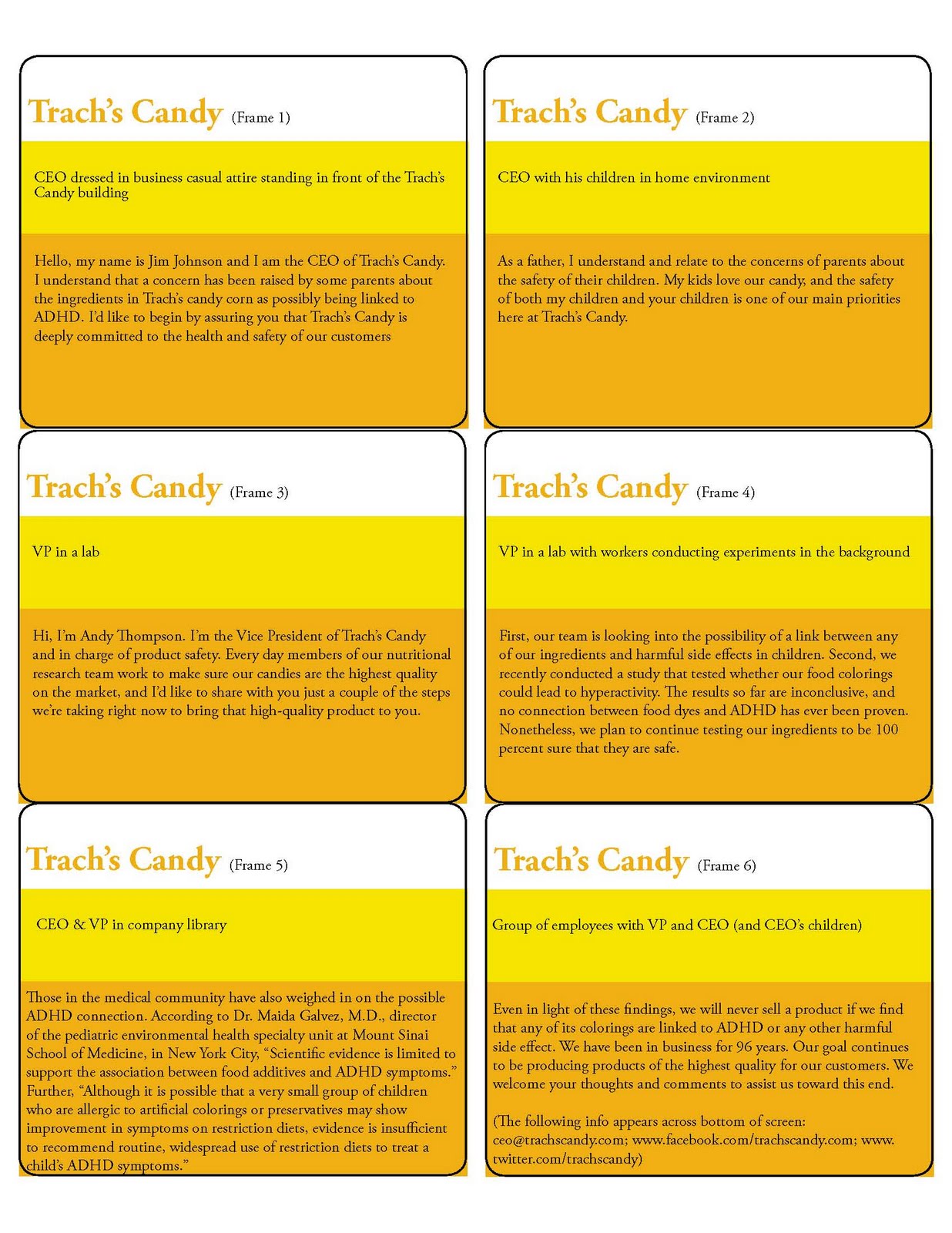
Trach's Candy Assignment: Storyboard for a YouTube Response


Created by: Alex, Delphine, Ohoud, Stephanie
(Click on image for a readable version)

Crowdsourcing a Better World

I have to admit I didn't know too much about crowdsourcing until we started talking more in-depth about it in class. The idea works well for fundraising and promotional ideas (like the Maroon5 song), but I thought it was really interesting how people are using it to solve serious crises in real-time. This NY Times article talks about how crowdsource sites like japanstatus.com and geigercrowd.net are popping up for people to get information on radiation levels in certain areas. Apparently people were frustrated with official sources of information, complaining that what they heard was bland or vague, and were looking for specific information about specific areas.

Another great example is from Kenya, where the crisis crowdsource site Ushahidi.com was developed to map reports of 2008 post-election violence and destruction. The site has since been used to organize volunteers in the Haiti earthquake, track election fraud in Mexico and map road obstacles in DC's own 2010 Snowmageddon! The article is a pretty good read, I recommend checking it out.

Perhaps our Future Blogger classes will be even more dynamic


Hello,

So Google has given Blogger a dynamic new look as of this Thursday: basically google is rolling out five new ways to view blog posts on Blogger to try to change the usual way people consume content on the internet.

The new viewing options will be discovered if you type “/view” at the end of a blog’s URL (e.g.http://cookingwithamy.blogspot.com/view). This utilizes HTML5, AJAX and CSS3 technology that has made websites more dynamic in recent years.

I added /view to ours but the "dynamic" part was not available yet to our blog, though I could see it for my capstone's blog and it looks cool, try to see this blog or others you know and let us know what you think: http://comm744.blogspot.com/view/

Forget the Algorithm, this is the New Google

So apparently Google is going to implement a system that allows users to click '+1' for the links that they like. Eventually, this will be a solid base of search results as opposed to the algorithm as discussed in our SEO class.

Personally, I don't like this idea. I like the idea that Google works to connect you to the best link, not the most liked link. It has been suggested that this is as a result of failed social platform attempt 'Google Buzz', still, I don't like this idea.

What do you all think?

Wednesday, March 30, 2011

The ethics of paywall jumping, Part 2

A couple of weeks ago I posed a question about the ethics of paywall jumping -- that is, of actively seeking out free ways of accessing content you would otherwise have to pay for. Now that the New York Times has officially put their pay system into effect, I'm finding I'm not the only one wondering about that. Here's an article from Nieman, a Journalism lab out of Harvard, discussing the various points of view on this issue. What do you think about it? Assuming you're currently a consumer of the New York Times, will you continue to read the paper for free even beyond your allotted 20 articles per month? Or will you stop when they ask you to sign up for a subscription, even though there are ways to get to the articles without paying?

Twitter Enables Fully-Functional, Embedded Tweets

Twitter has released a new set of developer tools that will allow bloggers to embed fully-functional Tweets on the Web. According to the developer description, the new feature - called Web Intents - will "make it possible for users to interact with Twitter content in the context of your site, without leaving the page or having to authorize a new app just for the interaction."

The new tool is more effective then Blackbird Pie (allow for embedding tweets, which was considered lifeless and didn't provide interactivity) because it allows users to interact with the embedded Tweet as if they were on Twitter's website itself, even offering a mini-profile feature, similar to the Hovercard.

Read the full article